


Key Takeaways
- Baby clothes are labelled by age but worn by height, and that mismatch is the whole problem.
- If height and weight point to different sizes, follow the height. If your baby sits between two sizes, take the larger one.
- Five signs say it is time to size up: toes pressing in a sleepsuit, tight shoulders, poppers pulling apart, sleeves above the wrist, and red marks after a change.
- Most three-month-olds are already in 3-6M, and buying deep in newborn size is the most common early mistake.
- Sizes last unequal amounts of time. Buy shallow across two sizes for the first six months and deeper only after nine months.
In This Article
- Why Baby Clothing Sizes Are Confusing in India
- Baby Clothes Size Chart India: Height and Weight by Age
- When to Move Up a Size: Five Signs to Watch
- How Long Does Each Size Actually Last?
- Sizing for Indian Weather and Sensitive Skin
- Sizing Different Garment Types
- Buying Ahead Without Wasting Money
- Conclusion
- FAQ
Every parent has the same drawer. Three unworn sleepsuits with the tags still on, in a size the baby went past in a fortnight. Next to them, one zipsuit worn so often it has faded, because it happened to fit.
Baby sizing is guesswork dressed up as a system. The label says months, but your baby has not read the label. This baby clothing size guide for India is built to fix that, using height and weight rather than age. It answers the question that actually matters: when do you move up a size, and how do you know before the clothes stop fitting? At Bubz we make organic bamboo babywear, and baby clothing sizes are the single most common question we get before a first order.
Why Baby Clothing Sizes Are Confusing in India
Three things go wrong at once, and together they explain why a baby clothing size guide is worth reading at all.
First, baby clothing sizes by age are an average, not a measurement. A label reading 3-6M describes the baby who sits in the middle of the growth chart at four months. Your baby may sit well above or below that line and still be perfectly healthy.
Second, sizes are not consistent across brands. An Indian label's 0-3M, an imported label's 3M, and a UK label's "up to 3 months" can differ by several centimetres. Buying by number across brands is how parents end up with a drawer that spans two effective sizes.
Third, some brands use narrow bands like 6-9M while others use wide bands like 6-12M, and a few use both. That overlap is real and it is worth checking before you compare two garments.
The fix for all three is the same. Stop buying by age and start buying by height.
Baby Clothes Size Chart India: Height and Weight by Age
Use this baby clothes size chart for India as a general guide, then check the specific brand's own chart before you order. Height is the more reliable of the two numbers for clothing, because babies outgrow garments by length long before the fit around the body becomes a problem.
| Size | Typical age | Typical height | Typical weight |
|---|---|---|---|
| Newborn | 0 to 3 weeks | Up to 55 cm | Up to 4 kg |
| 0-3M | 0 to 3 months | 55 to 62 cm | 3.5 to 6 kg |
| 3-6M | 3 to 6 months | 62 to 68 cm | 6 to 8 kg |
| 6-9M | 6 to 9 months | 68 to 72 cm | 8 to 9 kg |
| 9-12M | 9 to 12 months | 72 to 76 cm | 9 to 10 kg |
| 12-18M | 12 to 18 months | 76 to 82 cm | 10 to 11 kg |
Two notes on reading this. If your baby's height and weight point to different sizes, follow the height. And if your baby sits between two sizes, take the larger one, because a slightly roomy garment is comfortable while a tight one is not.
Should I Buy Newborn Size or 0-3 Months?
Buy mostly 0-3M, and only two or three pieces in newborn size.
Newborn is a genuinely short window. Many babies in India arrive at or above 3.2 kg and pass the top of the newborn range within two to three weeks. A cupboard stocked deep in newborn size is the most common and most expensive early mistake.
The exception is a baby born early or born small, where newborn size may be the working size for six to eight weeks. If you know that is likely, buy a small number of newborn pieces and hold off on the rest until after the birth.
What Size Baby Clothes for a 3 Month Old?
Most three-month-olds are in 3-6M, not 0-3M. This surprises parents, because the label reading 0-3M suggests it should still fit on the last day of the third month. In practice the fastest growth of the first year happens in weeks six to twelve, and many babies clear 62 cm before the three-month mark.
If your three-month-old is still comfortable in 0-3M, nothing is wrong. Check the length at the feet and the shoulders rather than the calendar.
When to Move Up a Size: Five Signs to Watch
Age will not tell you when to size up. These five signs will, and most of them appear a week or two before the clothes genuinely stop fitting.
Toes pressing into the foot of a sleepsuit. This is the earliest and most important signal, and it is the one parents miss most often. A footed zipsuit that is short pushes the toes into a curl for hours at a time. Feel for the toe position through the fabric while your baby is lying flat and relaxed.
The shoulders sit tight or the neckline strains. Envelope shoulders exist so the garment can be pulled down over the body during a change. If the neckline no longer stretches easily, the size has been outgrown across the chest.
Bodysuit poppers pull apart between the legs. When the crotch fastening sits under tension and pops open during a nappy change, the torso length has run out. Body length, not waist, is what determines bodysuit fit.
Sleeves ride above the wrist. A sleeve that has climbed past the wrist bone means roughly one size to go. This one gives you the most warning of the five.
Red marks after a change. Any indentation at the thighs, ankles or shoulders after taking the garment off means it has been too small for longer than you realised. Move up immediately.
A practical routine: check the toes once a week during a nappy change, and check the shoulders whenever you undress your baby fully. Two seconds each, and it removes the guesswork entirely.
How Long Does Each Size Actually Last?
Baby clothing sizes do not last equal lengths of time, and this is worth planning around.
The first year moves fastest. Expect roughly eight to ten weeks in 0-3M, ten to twelve weeks in 3-6M, and around three months in 6-9M and 9-12M. By 12-18M, a size can last five or six months. That is why buying in bulk becomes safer as your baby gets older, and riskier the younger they are.
The buying rule that follows from this is simple. Buy shallow and wide in the first six months, meaning fewer pieces across two sizes. Buy deeper from nine months onward, when a size will actually earn its wear.
Sizing for Indian Weather and Sensitive Skin
Sizing and fabric are the same decision, not two separate ones, and this is where a lot of Indian parents get caught out.
A garment that fits well but traps heat will still cause trouble. In humid conditions, sweat sits between fabric and skin, and that is the mechanism behind most heat rash in the first year. A close-fitting synthetic layer makes it worse. A breathable layer with a little room to move makes it better.
Bamboo suits Indian conditions particularly well here. It is smooth against skin, moisture-wicking rather than moisture-trapping, and naturally hypoallergenic, which matters for babies prone to eczema. A 95% bamboo and 5% elastane blend adds enough stretch that the garment accommodates a growth spurt instead of fighting it. That stretch is a real sizing advantage, because it widens the window in which a size still fits comfortably.
Two things to check on any label worn overnight. OEKO-TEX Standard 100 at Product Class 1 means the fabric has been tested against more than 300 harmful substances at the standard applied to items for babies. AZO-free dyes matter because dye chemistry sits directly against skin for hours. Our guide to the best fabrics for babies covers what to look for in detail, and our post on why bamboo works for sensitive skin explains the fibre science behind it.
One more Indian-specific point. Check whether a fabric shrinks after washing, because a garment that fits at purchase and shrinks by 3% has effectively lost you a fortnight of wear. Wash cold and dry in shade to keep the fit you paid for.
Sizing Different Garment Types
Baby clothing sizes behave differently by category, so the decision changes slightly depending on what you are buying.
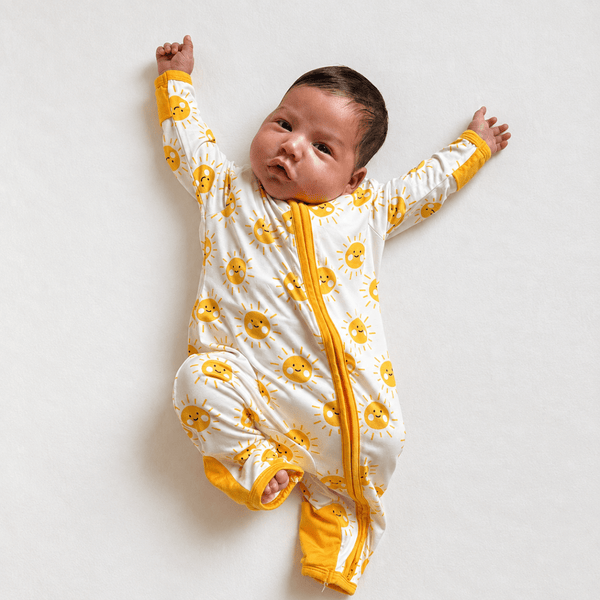
Zipsuits and footed sleepsuits are the most size-sensitive item in the wardrobe, because the foot is enclosed. There is no tolerance at all. Size up at the first sign of toe pressure. A two-way zip helps here as well, since it opens from the hem for nappy changes and keeps the chest covered throughout. Our post on the benefits of a zipsuit explains the design in full.
Bodysuits are governed by torso length rather than width. If the poppers strain, size up, even if the garment looks fine around the body.
Rompers and co-ord sets are the most forgiving, because the legs are usually open and a little length is not a problem. You can often buy these one size ahead without waste.
Anything with a fixed waistband should be bought to fit now, not ahead, since a loose waistband on a crawling baby will simply slide.
Buying Ahead Without Wasting Money
A gift or a sale tempts everyone into buying ahead. It can work, but only with a rule attached.
Buy ahead by one size, never two. Match the size to the season it will be worn in, not the season you are buying in. A 6-9M bought in September will be worn around December, so it needs to work for winter rather than for the end of monsoon.
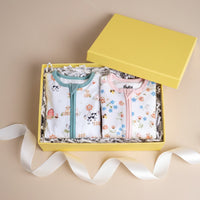
For gifting, size up deliberately. A newborn-size gift often arrives too late to be worn at all. A 3-6M or 6-9M gift almost always gets used, and it is the single most useful thing you can give a new parent who has already been given nine newborn outfits. Our gifting bundles are built in the larger sizes for exactly this reason.
Conclusion
Baby clothing sizes in India are labelled by age and worn by height, and that mismatch is the whole problem. Measure rather than assume, follow height over weight, size up when the toes press or the poppers strain, and buy shallow across two sizes for the first six months.
Get the fabric right alongside the fit, because a well-sized garment in the wrong material still causes heat rash. Browse the Bubz bamboo zip suits for two-way zip sleepsuits in sizes from newborn to 12-18M. The bamboo bodysuits and rompers cover the daytime layers, all in soft 95% bamboo with OEKO-TEX certification and AZO-free dyes.
FAQ
1. What size baby clothes should I buy for a 3 month old in India?
Most three-month-olds fit 3-6M rather than 0-3M, because the fastest growth of the first year happens between six and twelve weeks. Check your baby's height instead of the calendar. Above roughly 62 cm, move to 3-6M. If your baby is still comfortable in 0-3M at three months, that is perfectly normal.
2. How do I know when to move up a size in baby clothes?
Watch for five signs: toes pressing into the foot of a sleepsuit, a tight neckline or shoulders, bodysuit poppers pulling apart, sleeves riding above the wrist, and red marks on the skin after a change. The toe check is the earliest and most reliable. Check it once a week during a nappy change.
3. Should I buy newborn size or 0-3 months before the baby arrives?
Buy mostly 0-3M with only two or three newborn pieces. Many babies in India are born at or above 3.2 kg and pass the newborn range within two to three weeks. Buying deep in newborn size is the most common early mistake. Wait until after the birth to buy more.
4. Are baby clothing sizes the same across brands in India?
No. Indian, UK and US labels differ, and even within India some brands use narrow bands like 6-9M while others use wide bands like 6-12M. Always check the brand's own height and weight chart rather than relying on the month label alone.
5. How long does each baby clothing size last?
Roughly eight to ten weeks in 0-3M and ten to twelve weeks in 3-6M, with each later size lasting longer. By 12-18M a size can last five or six months. Buy fewer pieces across two sizes early on, and buy deeper only after nine months.
6. How do I choose the right baby clothes size and fabric for sensitive skin?
Choose by height rather than age, and allow a little room rather than a close fit, since trapped sweat is a common trigger for heat rash. Pick a breathable, moisture-wicking, naturally hypoallergenic fabric such as bamboo. Check for OEKO-TEX Standard 100 certification and AZO-free dyes on anything worn overnight.
7. Should I size up if my baby is between two sizes?
Yes. Take the larger size. A slightly roomy garment is comfortable and buys you several extra weeks of wear, while a tight one restricts movement and can leave marks. This is especially true for footed zipsuits, where there is no tolerance at the toes.
Sania Gupta writes about bamboo baby clothing, infant care, and practical parenthood for Bubz India.