




- Why Winter Dressing Matters
- Follow the Layering Rule
- Ideal Fabrics for Winter
- Dressing Your Baby for Sleep
- Signs Your Baby Might Be Too Hot or Too Cold
- Outdoor Winter Tips
- Common Mistakes to Avoid
- Final Thoughts
When the air turns crisp and nights get longer, parents often ask: “How warm is too warm?” or “What’s the right number of layers?” Dressing your baby for winter can feel confusing, but it doesn’t have to be. Babies under 18 months can’t regulate their body temperature as well as adults, so their clothing choices make a big difference to comfort, safety, and sleep.
Here’s your complete, research-based guide to keeping your baby warm, cozy, and comfortable all winter long.
Why Winter Dressing Matters
Babies lose heat faster than adults because their surface area is proportionally larger compared to their body weight. According to the Children’s Hospital of Philadelphia (CHOP), newborns can lose heat up to four times faster than adults in a cold environment.¹
In addition, the American Academy of Pediatrics (AAP) notes that newborns’ normal body temperature should stay between 36.5°C and 37.5°C,² and since their thermoregulation is still developing, small changes in environment can affect them quickly.
That’s why thoughtful layering, safe sleep practices, and breathable fabrics matter so much during winter.
Follow the Layering Rule
The golden rule for winter dressing: Dress your baby in one more layer than what you’re wearing.
Layering helps you add or remove clothing based on changes in temperature, whether you’re indoors, in the car, or outside.
Base Layer:
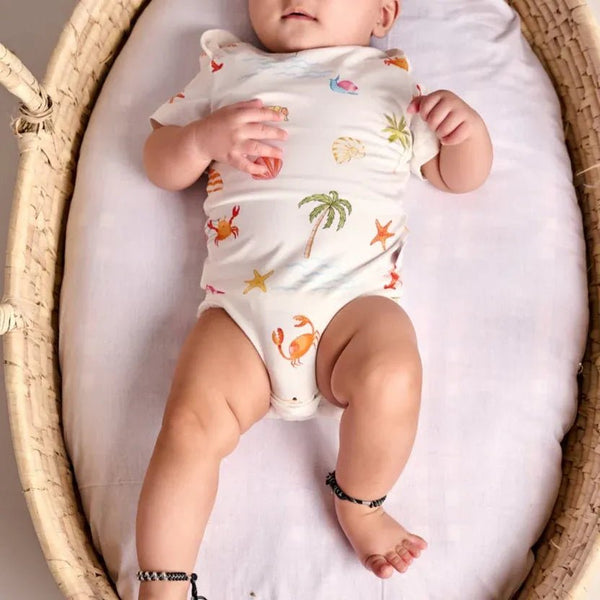
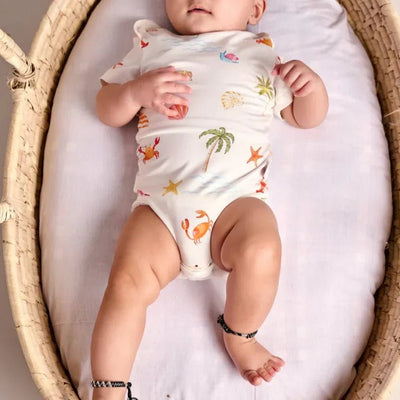
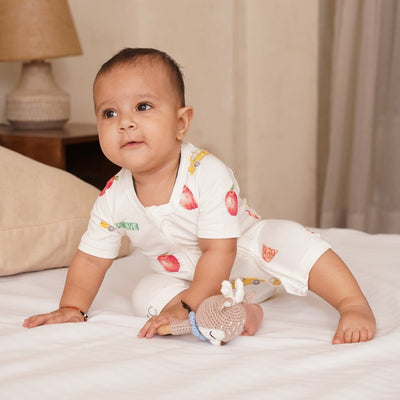
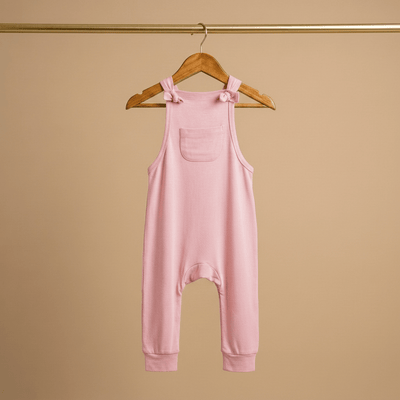
Start with a soft, breathable bodysuit or romper. This layer sits closest to the skin, helping retain warmth while wicking away moisture.
Choose natural fabrics such as bamboo, organic cotton, or merino wool, which regulate temperature better than synthetics.
Middle Layer:
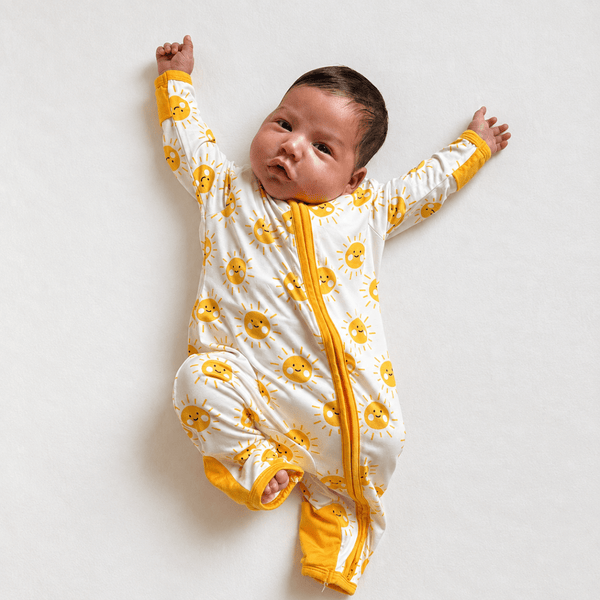
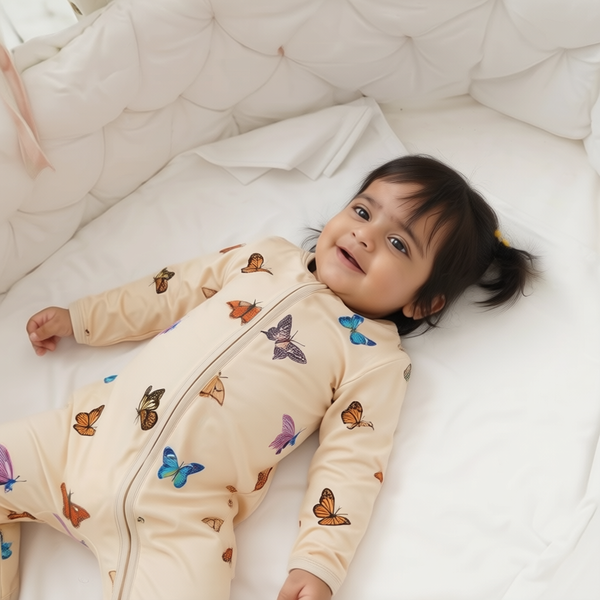
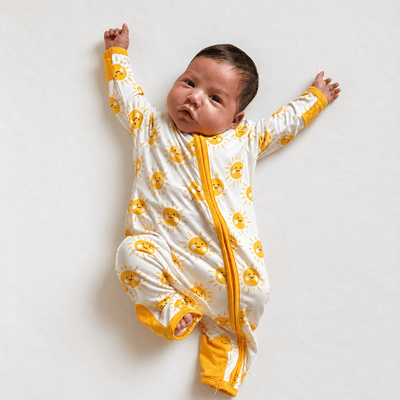
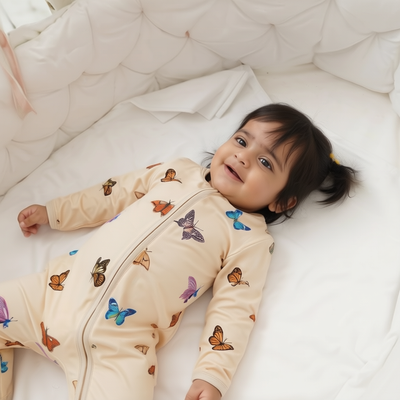
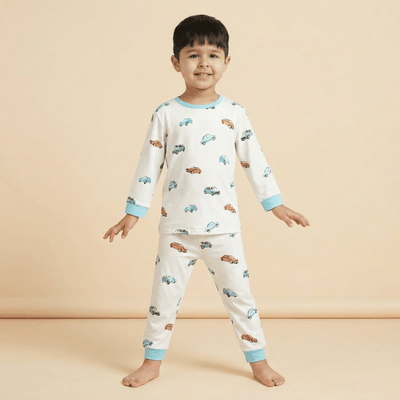
Add a long-sleeve sleepsuit/zipsuit to lock in warmth. Make sure it’s snug but not tight, and allows for easy diaper changes.
Outer Layer:
If you’re stepping outside, top up with a hat, mittens, and booties, and a lightweight blanket or jacket. Once you’re back indoors, remove outer layers promptly to prevent overheating.
Ideal Fabrics for Winter
Not all fabrics are created equal, especially for delicate and sensitive baby skin.
Best options:
-
Bamboo: Naturally thermoregulating, breathable, and moisture-wicking. Ideal for babies who sweat during sleep.
-
Organic cotton: Gentle and breathable, suitable for layering.
-
Merino wool: Provides excellent insulation while staying soft and temperature-balanced.
Avoid:
-
Synthetic materials (like polyester fleece) for base layers as they trap heat and moisture.
-
Thick, non-breathable fabrics that can lead to overheating.
The Cleveland Clinic also emphasizes the importance of using breathable layers, recommending that babies wear “light, snug layers rather than thick, bulky clothing” in cold weather.³
Dressing Your Baby for Sleep
Many parents wonder what their baby should wear at night when blankets aren’t safe.
-
Maintain a room temperature between 16°C and 20°C as its considered optimal for infant sleep by the Lullaby Trust (UK).⁴
-
Dress your baby in a light bodysuit plus a sleep sack or wearable blanket rated for the season (measured in TOG).
-
Avoid loose bedding, duvets, or quilts in cribs.
To check comfort, feel your baby’s chest or back, it should be warm, not sweaty or cool. Hands and feet are often cooler and aren’t reliable indicators.
Signs Your Baby Might Be Too Hot or Too Cold
Too cold:
-
Chest or stomach feels cool to touch
-
Baby is unusually sleepy or less active
-
Pale skin tone
Too warm:
-
Sweaty neck or back
-
Flushed cheeks
-
Damp hair or fussiness
If in doubt, remove or add a single layer and recheck after 10 minutes.
Outdoor Winter Tips
Fresh air is great for babies but in moderation.
-
Dress them in layers you can adjust easily.
-
Use a stroller cover or blanket as a wind barrier.
-
Avoid long outdoor stretches when temperatures drop below 10°C.
-
Once indoors, remove hats and outer layers to prevent overheating.
Common Mistakes to Avoid
❌ Over-bundling indoors: Too many layers can lead to overheating, a known risk factor for Sudden Infant Death Syndrome (SIDS).
❌ Using loose blankets: Always replace with wearable sleep sacks.
❌ Neglecting breathable fabrics: Non-breathable materials trap heat and moisture, causing irritation.
Final Thoughts
Keeping your baby warm in winter doesn’t mean piling on thick layers. It’s about smart layering, breathable fabrics, and temperature awareness. When you follow these steps, you’ll help your baby stay comfortable, safe, and sound, whether during day or night, indoors or outdoors.
Remember: babies are better off a little cool than too warm. Trust your touch, adjust layers as needed, and enjoy those cozy winter cuddles.
References
-
Children’s Hospital of Philadelphia - Warmth and Temperature Regulation
-
American Academy of Pediatrics - Thermoregulation: Advances in Preterm Infants
-
Cleveland Clinic - How to Dress Your Baby for Winter
-
The Lullaby Trust - Room Temperature and Baby Sleep Safety