



Key Takeaways
-
A jhabla is a tie-front top with no bottom half, which is why it suits the first six weeks better than any other garment. It clears the cord stump and needs no pulling over the head.
-
A bodysuit fastens between the legs so it never rides up. A romper is a bodysuit with legs, and sometimes sleeves, in one piece.
-
Most Indian babies move out of jhablas at around six to eight weeks, once the cord has healed and they start kicking the open hem loose.
-
For nappy changes, a two-way zip romper is fastest at about 15 seconds. Poppers take closer to 40, and there are usually more than 20 of them.
-
Buy roughly 6 jhablas, 8 bodysuits and 6 rompers for the first three months, and add two of each if you are in a monsoon city where drying takes a full day.
In This Article
Somebody in your family has already told you to buy jhablas. Somebody else has sent you a link to rompers. A third person has bought bodysuits in a size your baby will reach next winter. All three are right, and all three are talking about different months of your baby's first year.
The romper vs jhabla vs bodysuit question is really a question about timing and about nappy access. Each garment solves a different problem, and the problem changes roughly every six weeks. This guide sets out what each one is, when it works, and when to stop using it. At Bubz we make organic bamboo babywear in India, and this is the single most common question we get from parents shopping for a first baby.
What Is a Romper?
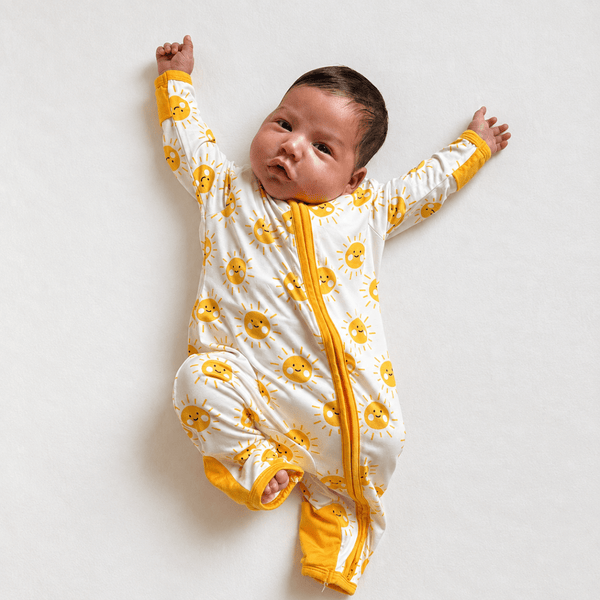
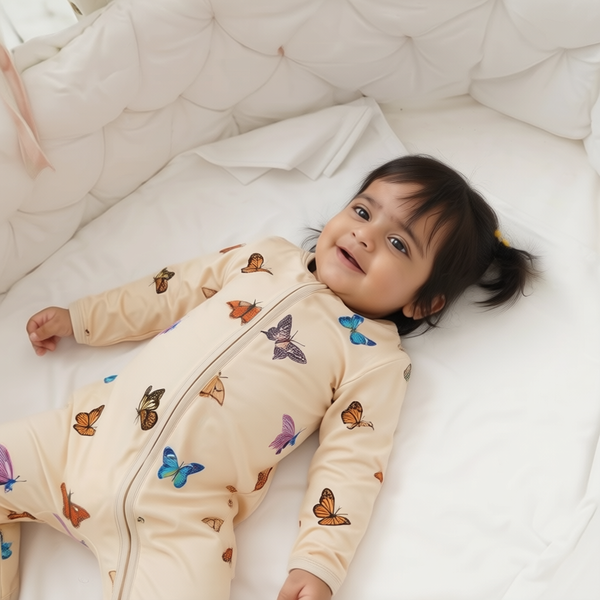
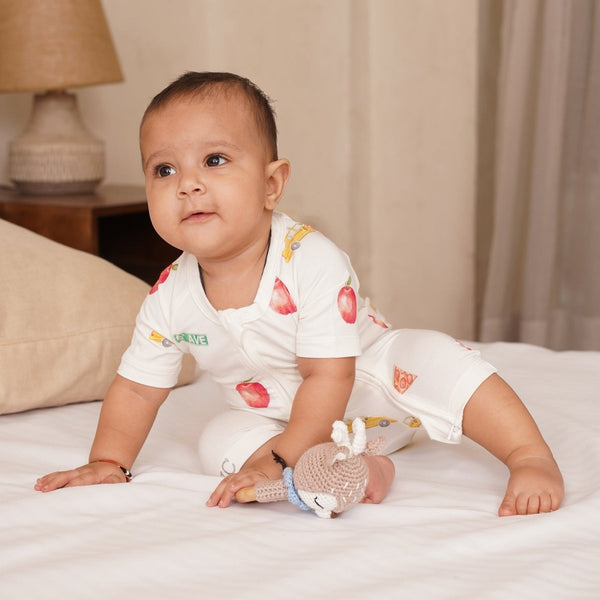
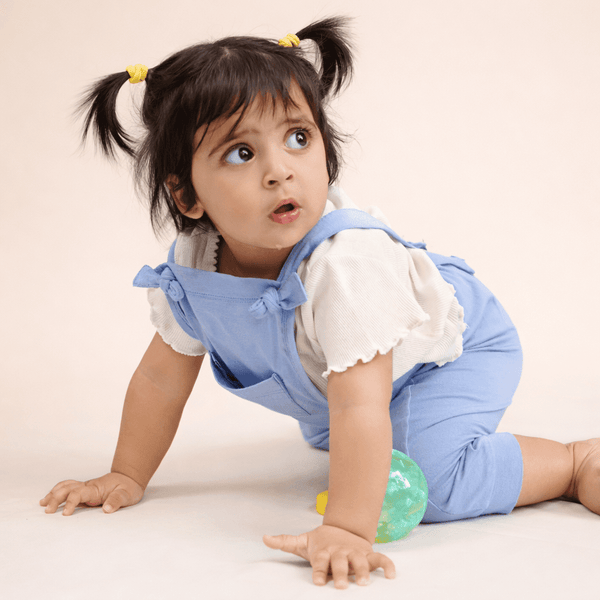
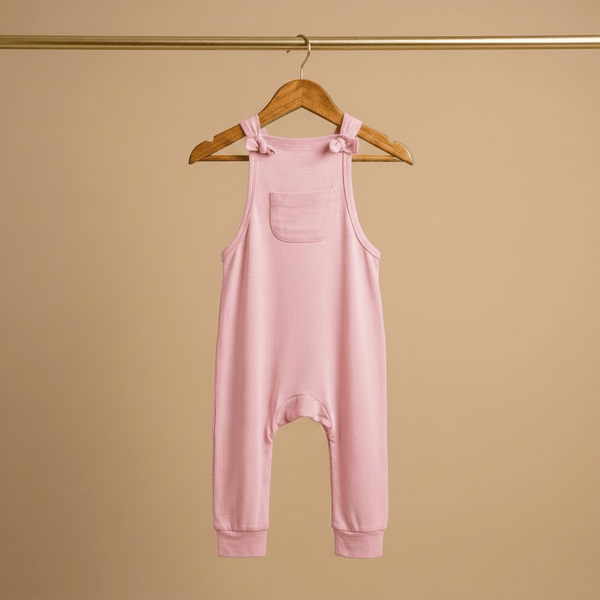
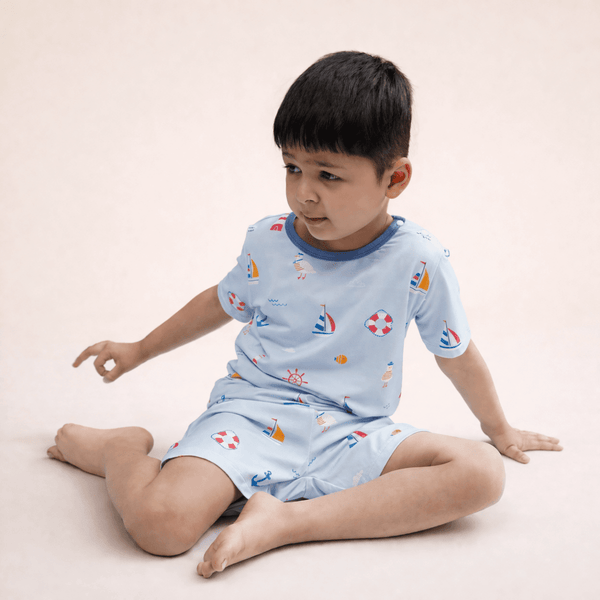
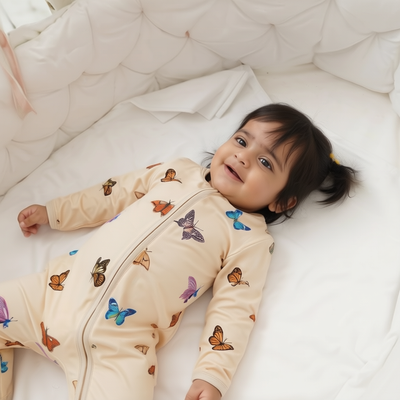
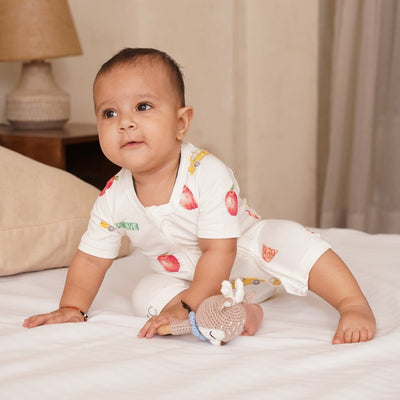
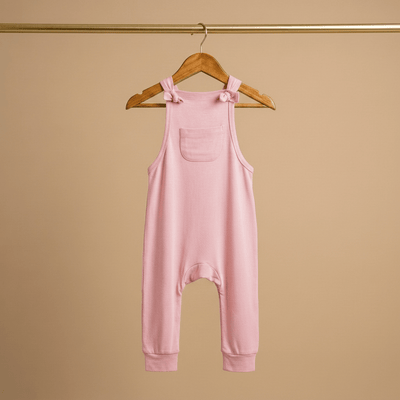
A romper is a one-piece garment covering the chest and the legs, fastening between the legs with poppers or a zip. Think of it as a bodysuit that kept going past the hip.
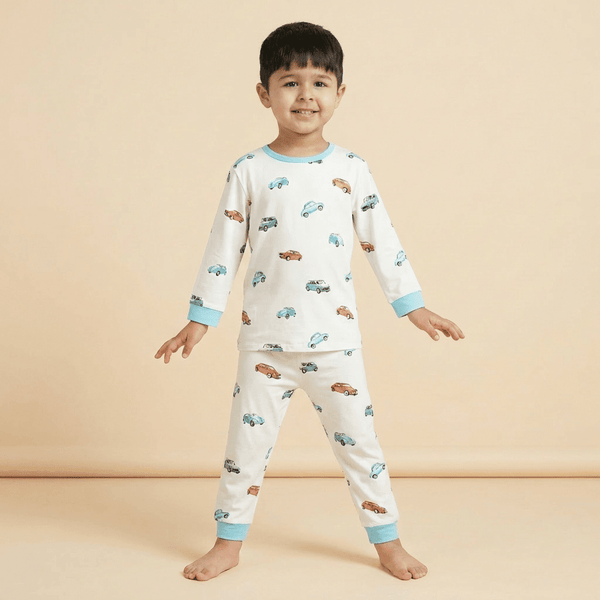
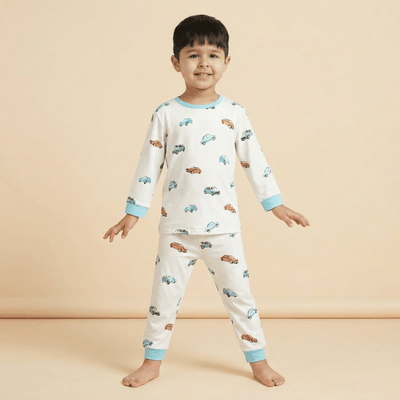
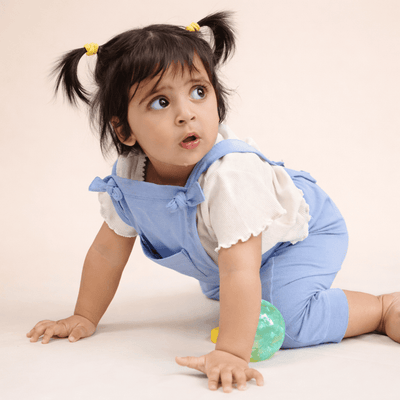
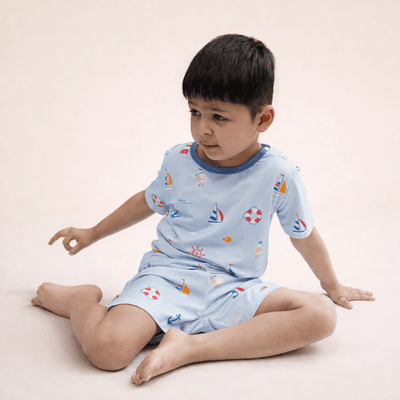
Rompers come in two broad shapes. Short rompers stop at the thigh and the shoulder, which is the summer version. Long rompers cover the full leg and arm, sometimes with fold-over mittens at the cuff, and that is the sleepwear version.
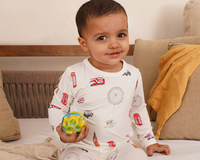
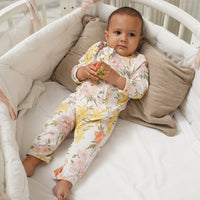
The reason a baby romper is the workhorse of the Indian wardrobe is coverage. One garment, one decision, nothing riding up when you lift the baby. A bamboo romper also does the job of two layers in an AC room, because the fabric holds warmth without adding bulk.
The trade-off is the fastening. A popper romper has a lot of poppers, and you will do that maths at three in the morning.
What Is a Jhabla?
A jhabla is a short, loose, tie-front top worn by newborns across India. It has no bottom half. It opens fully flat at the front and ties at the side with two fabric strings, so nothing goes over the baby's head and nothing presses on the stomach.
This design is not decorative. It exists because of the umbilical cord stump.
For the first one to three weeks the stump needs to stay dry and uncovered by anything tight. A jhabla leaves the whole lower abdomen open to air. Nappies sit below it, the stump sits above the nappy line, and nothing rubs. No romper or bodysuit manages this as cleanly.
The second reason is head control. A newborn has almost none, and threading a floppy head through a neck opening is the part of dressing that new parents dread most. A jhabla removes that step entirely.
When Do Babies Outgrow the Jhabla?
Usually between six and eight weeks, and the baby tells you.
Once kicking starts, an open hem rides up to the chest within minutes and the baby is bare from the waist down. That is the signal to move to a bodysuit or a romper. Some families keep two or three jhablas going as an indoor top through the first summer, which is fine, but they stop being the main garment.
What Is a Bodysuit?
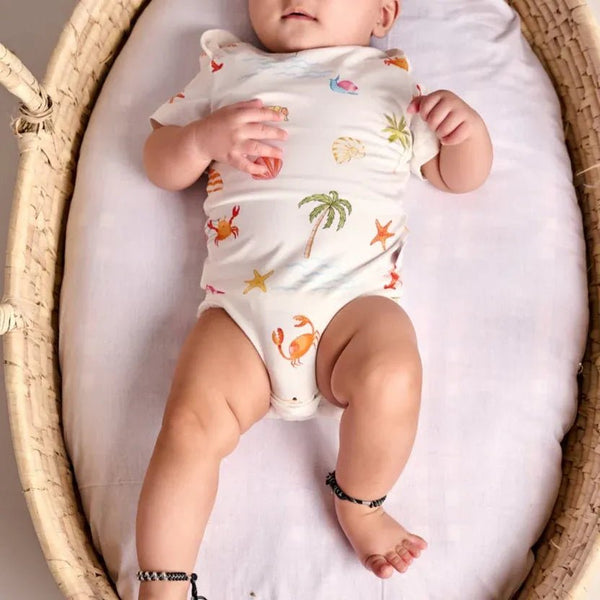
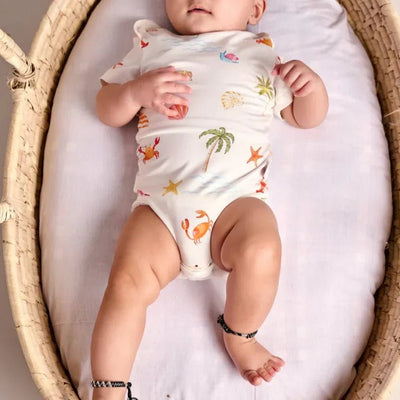
A bodysuit is a top that fastens with poppers between the legs. That gusset is the whole point of it. It anchors the garment so it cannot ride up, which means the back stays covered when you carry the baby against your shoulder.
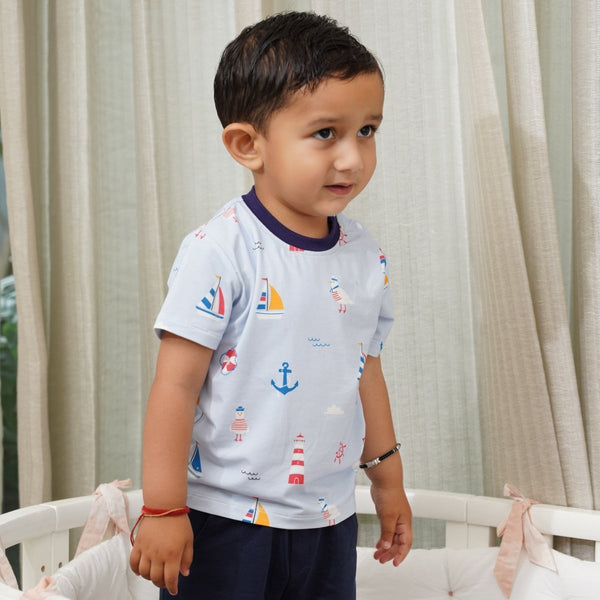
Bodysuits come with short or long sleeves, and most Indian brands make an envelope neck. Those diagonal folds at the shoulder are not styling. They let you pull the garment down over the body rather than back over the head after a nappy leak, which every parent eventually needs.
A baby bodysuit is the layering piece of the wardrobe. Alone in Chennai in May, under a romper in Delhi in December, under a kurta for a family function.
The limitation is that a bodysuit is only half an outfit once the weather cools. You are pairing it with leggings or pyjamas, which means two garments to manage and two waistbands to check.
Romper vs Jhabla vs Bodysuit: The Comparison Table
|
Jhabla |
Bodysuit |
Romper |
|
|---|---|---|---|
|
Covers legs |
No |
No |
Yes |
|
Rides up |
Yes, once kicking starts |
No, gusset holds it |
No |
|
Goes over the head |
No |
Sometimes, envelope neck avoids it |
No |
|
Cord stump safe |
Yes, the best option |
Usually, if loose |
Not ideal in week one |
|
Nappy change speed |
Fastest, nothing to undo |
Medium |
Fastest with a zip, slowest with poppers |
|
Best age |
0 to 8 weeks |
6 weeks to 18 months |
6 weeks to 24 months |
|
Works as sleepwear |
Indoors in summer only |
With pyjamas |
Yes, on its own |
|
Layers well |
Poorly, hem lifts |
Excellently |
As an outer layer |
Read this as a sequence rather than a contest. Almost every Indian baby wears all three, in this order, within the first three months.
Romper vs Jhabla vs Bodysuit: Which One at Which Age
Weeks 0 to 6. Jhablas, and a lot of them. Pair with a nappy and a separate cotton or bamboo bottom if the room is cool. This is the phase where the cord stump and the missing head control decide everything.
Weeks 6 to 12. The switch happens here. Bodysuits become the default day garment, rompers become the default night garment. Jhablas drop to occasional indoor use.
Months 3 to 9. Rompers take over. The baby is rolling, then sitting, then reaching for their own feet, and a one-piece is the only thing that survives that. Bodysuits stay useful as a base layer.
Months 9 to 18. Rompers continue, sized generously. Crawling puts pressure on the knees, so check the knee seam before buying anything you plan to keep for months.
The one rule that carries through every phase is to buy across two sizes rather than deep in one. You can see how the three garment types sit alongside each other across our full range of bamboo babywear.
Romper vs Jhabla vs Bodysuit in Indian Weather
Indian dressing decisions are not really about season. They are about the gap between an AC room and the corridor outside it.
Summer, 35 degrees and above. A short-sleeved bodysuit alone, or a short romper. Avoid full-sleeve anything in the afternoon. If prickly heat has already appeared behind the neck and in the elbow creases, drop to a single breathable layer and change it more often. Fabric matters more than cut here, and our guide to the best fabrics for babies covers why.
Monsoon. This is where quantities go up rather than styles change. Nothing dries. A thick cotton romper can take a full day and a half on an indoor rack in Mumbai in July, and it will smell before it dries. Bamboo and light knits dry faster, which is the practical reason Indian wardrobes need more pieces than an international checklist suggests.
Winter in the north. A long-sleeved bodysuit under a full romper, with socks. Two thin layers beat one thick one, because you can remove one when you step into a heated room.
AC rooms, year round. This catches people out in April. The room is at 24 degrees and the baby has been dressed for 38. A full-sleeve romper indoors and a short bodysuit outdoors is often the right combination on the same day.
Nappy Changes: Which Design Actually Wins
You will change roughly 10 to 12 nappies a day in the newborn phase. Over three months that is close to a thousand changes, so the fastening is not a small detail.
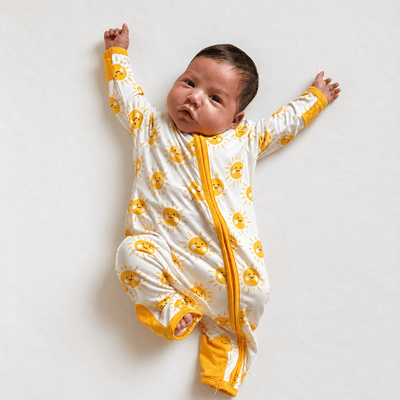
A two-way zip is the fastest. You open from the bottom up, the chest and shoulders stay covered, and the whole change takes around 15 seconds. It is also the only design you can do one-handed in the dark. Our zip suits use a two-way zip with a chin guard for this reason.
Poppers are the slowest. A long romper can carry more than 20 of them, and misaligning one at the ankle means redoing the whole row. At 3am, with a baby who has just fallen back asleep, that is a real cost.
A jhabla wins on speed by having nothing to undo at all. That is another reason it dominates the first weeks.
How Many of Each Do You Need?
These numbers assume a washing machine, an indoor drying rack, and a wash cycle every second day.
|
Garment |
First 3 months |
Add for monsoon |
|---|---|---|
|
Jhabla |
6 |
2 |
|
Bodysuit |
8 |
2 |
|
Romper, short |
4 |
2 |
|
Romper, long or sleepwear |
6 |
2 |
The monsoon column is not padding. If you are in Mumbai, Kochi, Kolkata or coastal Karnataka between June and September, drying time is the constraint on your wardrobe, not the baby.
Two more things worth saying plainly. Buy fewer newborn-size pieces than you think, because most babies pass that band inside three weeks. And skip the outfits that need three separate items to look complete, because they will sit unworn in the drawer.
Conclusion
The romper vs jhabla vs bodysuit comparison is less a choice than a timeline. Jhablas carry the first six weeks because they respect the cord stump and skip the head. Bodysuits take over as the layering base once kicking begins. Rompers become the everyday garment from three months and stay there.
If you are buying now for a baby who has not arrived, weight the order towards jhablas and 0-3M bodysuits. Keep the romper order small, and buy again once you know how fast this particular baby is growing. Fabric and fastening will matter more to your daily life than the print on the front.
FAQ
1. What is the difference between a romper and a bodysuit?
A bodysuit covers the torso and fastens between the legs, leaving the legs bare. A romper does the same but continues down over the legs, so it is a complete outfit on its own. Both stay put because of the fastening under the nappy.
2. Is a jhabla better than a romper for a newborn?
For the first six weeks, yes. The tie-front opening keeps the umbilical cord stump uncovered and dry, and nothing has to go over the baby's head. After the cord heals and the baby starts kicking, the open hem rides up and a romper becomes more practical.
3. How many jhablas does a newborn need in India?
Around six for the first month, and eight to ten if you are in a monsoon city where clothes take a day or more to dry. Newborns go through three to five changes a day once spit-up and nappy leaks are counted.
4. Can babies sleep in a romper?
Yes, and a long romper is the standard sleepwear choice in India. Choose a breathable knit, avoid loose blankets in the cot, and check the back of the neck rather than the hands to judge whether your baby is too warm.
5. Are bamboo rompers better than cotton ones?
Bamboo knits are more breathable and dry considerably faster than heavy cotton, which matters in humid Indian conditions and during monsoon. Cotton is cheaper and more widely available. Both are fine choices if the fabric is soft and certified free of harmful substances.
6. When should I stop using a jhabla?
Most parents stop between six and eight weeks. The clearest sign is the hem riding up to the chest within minutes of dressing the baby, which happens once leg movement gets stronger.
7. What should a newborn wear in an AC room in summer?
A full-sleeved romper or a long-sleeved bodysuit with light bottoms is usually right for a room at 24 to 26 degrees. Keep a second lighter set ready, because stepping outside into an Indian summer afternoon needs a complete change of layer.