


Introduction
If you have ever stood in front of your baby’s wardrobe thinking, “Is this fabric going to make them sweaty, itchy, or uncomfortable?” you are not alone. For babies, especially under 18 months, clothing is not just about looking cute. It is about comfort, skin safety, and better sleep.
At Bubz, we build everyday essentials like zipsuits, bodysuits, and rompers with this in mind. We focus on soft, breathable fabrics and practical designs that work for real life. This article is not about buying more. It is about making a confident fabric choice, especially if you are comparing bamboo vs cotton baby clothing and trying to figure out what is best for your baby’s skin and sleep.
Why Fabric Matters?
Babies cannot regulate body temperature as efficiently as adults, and their skin is more delicate. That means fabric choices can affect how comfortable they feel, how well they sleep, and how often they get irritated by heat, sweat, or friction.
Many parents start with cotton because it is familiar. Then the questions begin. Why does the fabric feel rough after a few washes? Why is my baby waking up sweaty? Why is there redness around the neck or waistline?
This is where the conversation around cotton vs bamboo baby clothes matters. The right fabric can support baby sleep comfort, reduce irritation, and make daily dressing easier across seasons, including Indian weather where humidity and heat can change quickly.
How to Choose and Understand Bamboo vs Cotton for Babies
If you are deciding between bamboo and cotton, here are a few practical principles that help.
- Start with your baby’s skin. If your baby gets rashes, heat bumps, or eczema flare-ups, prioritise a soft fabric for baby skin and consider hypoallergenic baby clothes.
- Think about sleep first. Baby sleepwear should be breathable, comfortable, and not trap heat. Temperature regulating fabric can make a noticeable difference at night.
- Check how the fabric handles sweat. Moisture wicking fabric helps keep the skin dry, especially around the neck, back, and diaper area.
- Consider your weather. If you live in a warm or humid climate, breathable baby clothing and natural fibres for babies tend to feel better than heavier knits.
- Look beyond the first wear. Many fabrics feel soft initially. What matters is how they feel after many washes, because baby laundry is constant.
1. Bamboo feels noticeably softer on baby skin
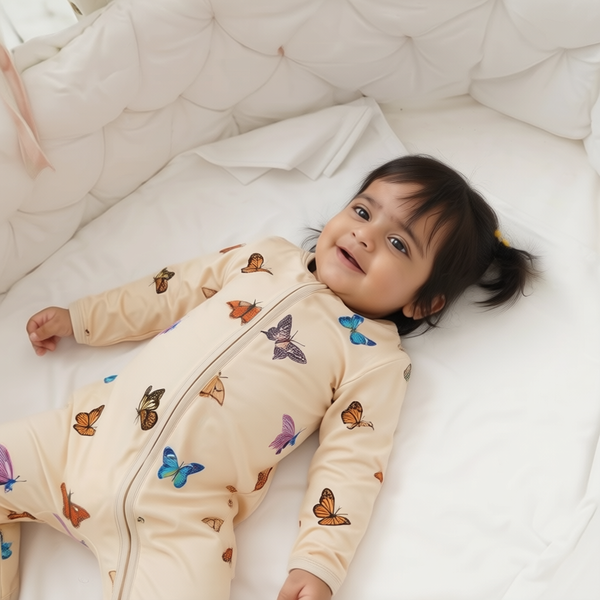
One of the biggest bamboo baby clothes benefits is how soft it feels. Bamboo fabric is often described as silky and smooth, which matters because babies move constantly and their skin can react to friction. A soft fabric for baby skin can help reduce redness, especially around areas like the neckline, cuffs, and waistband.
In comparison, cotton can feel soft at first but may feel more textured over time depending on quality, weave, and washing. For parents choosing bamboo vs cotton for baby skin, softness is usually the first difference they notice.

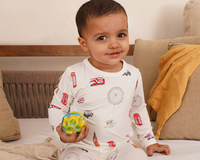
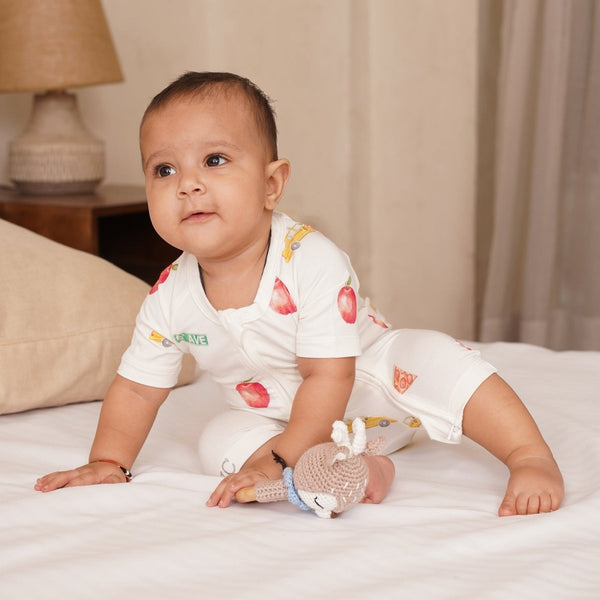
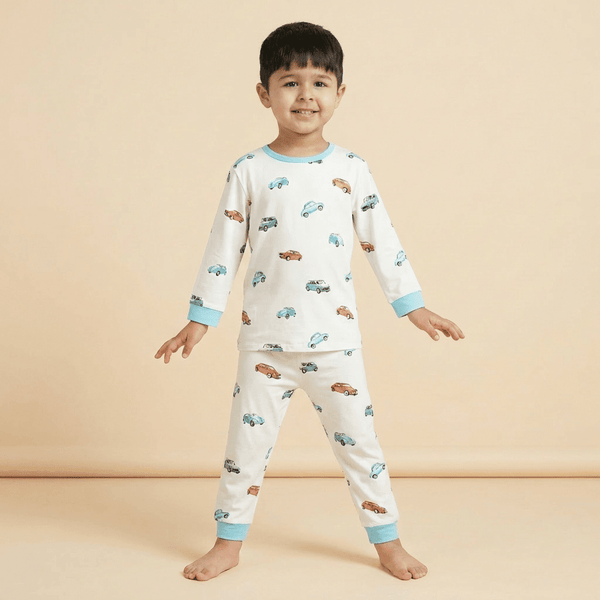
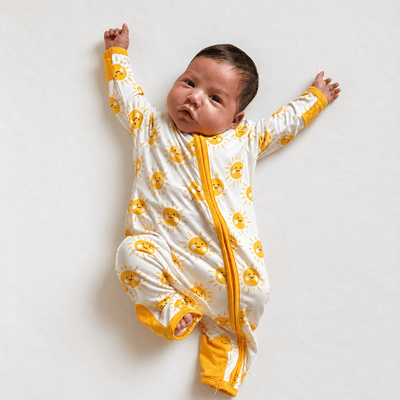
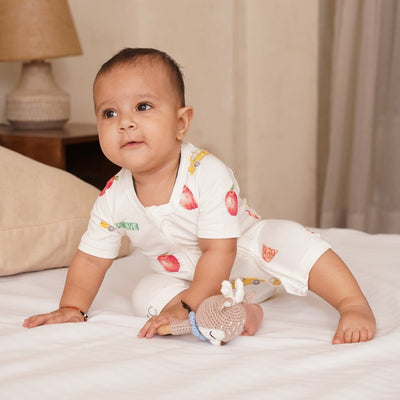
Alphabet Adventures Bamboo Zipsuit
Rs. 2,200
2. Bamboo is more breathable and temperature regulating
Breathability is a practical, everyday advantage. Bamboo is known as a temperature regulating fabric, which means it helps babies feel more comfortable across changing temperatures. This is especially helpful for naps and night sleep when babies can get overheated easily.
If your baby tends to sweat during sleep, bamboo baby sleepwear can feel cooler and less sticky than heavier fabrics. This matters even more in humid environments, which is why many parents researching bamboo vs cotton for Indian weather prefer bamboo for daily wear.
3. Bamboo wicks moisture better, which can help reduce irritation
Babies sweat. They drool. They have milk spills. They also spend a lot of time lying down or being held, which can trap heat. A moisture wicking fabric helps pull dampness away from the skin so your baby stays drier and more comfortable.
This is one of the most practical bamboo baby clothing advantages, especially for babies who get heat rashes or irritation in skin folds. Cotton can absorb moisture too, but it can also hold onto dampness, which may feel uncomfortable for longer.

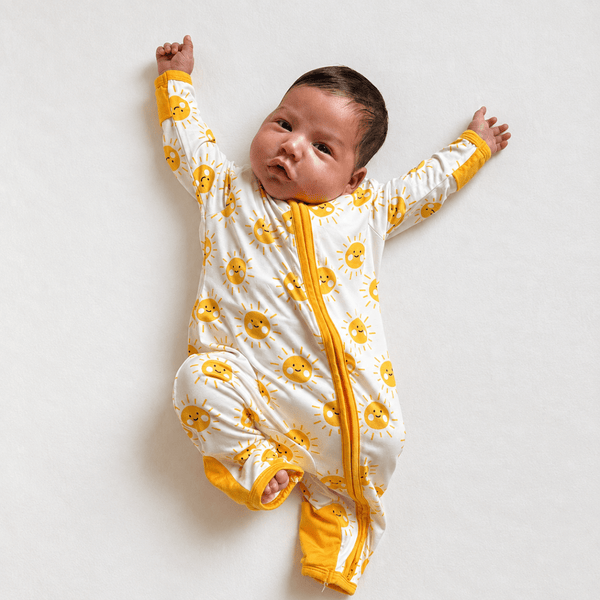
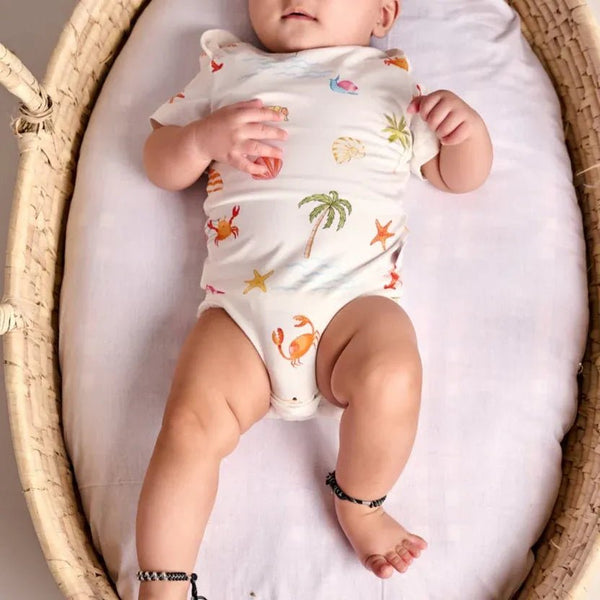
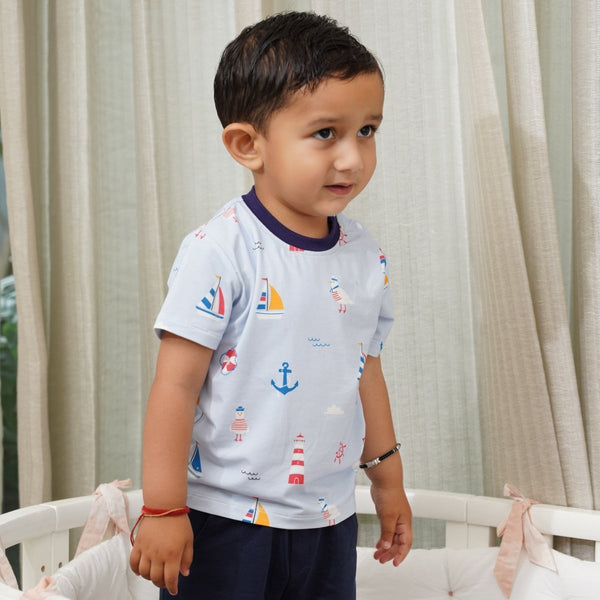
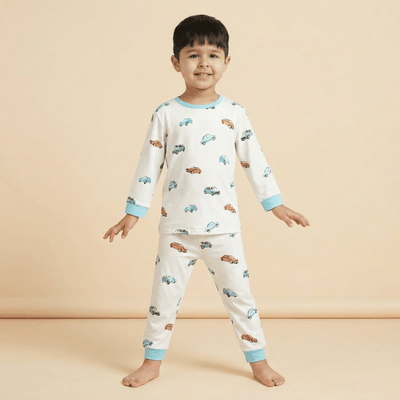
Barn Bamboo Zipsuit
Rs. 2,200
4. Bamboo can be gentler for sensitive skin and eczema-prone babies
If you are searching for bamboo clothing for babies with eczema or sensitive skin, bamboo is often considered a good option because it is naturally soft and is commonly used for hypoallergenic baby clothes. Many parents find that gentle fabrics reduce scratching and discomfort, especially during sleep.
That said, every baby is different. It is always wise to choose trusted manufacturers and look for safety standards where possible, especially when your baby’s skin reacts easily.
5. Bamboo holds softness and shape better over time
Babies go through frequent washes, and clothing gets worn hard. A fabric that stays soft after repeated washing can feel better for both baby and parent. Many parents comparing bamboo baby clothes vs cotton like bamboo because it tends to keep its smooth feel longer and often drapes well as babies move.
Durability is part of value too. If the fabric stays comfortable for longer, you may find yourself reaching for those pieces more often across seasons.

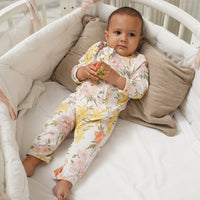
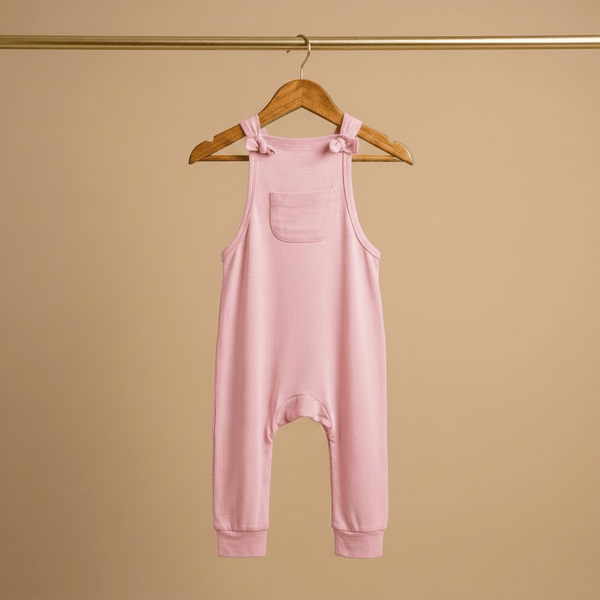
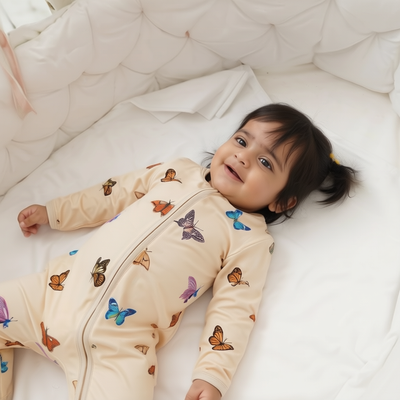
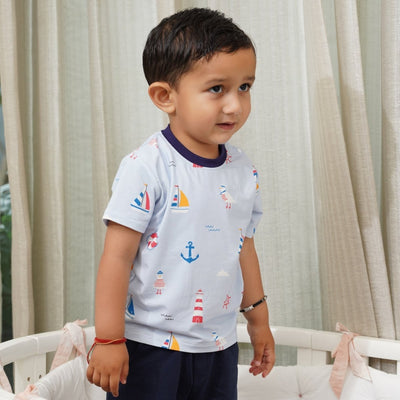
Blossoms Bamboo Zipsuit
Rs. 2,200
Quick Reference or Summary Table
If you want a simple way to compare bamboo fabric for babies and cotton, this table summarises the most important differences parents usually care about.
| Category | Bamboo | Cotton |
|---|---|---|
| Feel on skin | Very soft, smooth, gentle on newborn skin | Can vary by quality, may feel rougher over time |
| Breathability | High, supports breathable baby clothing | Moderate to high, depends on weave |
| Temperature comfort | Often more temperature regulating | Can trap heat in warmer conditions |
| Moisture handling | More moisture wicking, feels drier | Absorbs moisture but may stay damp longer |
| Sensitive skin | Often preferred for bamboo vs cotton for baby skin decisions | Can be fine, but processing and dyes may affect comfort |
| Long-term softness | Typically holds softness well over washes | May stiffen or lose softness with frequent washing |
Final Thoughts
Choosing between bamboo and cotton does not need to feel overwhelming. If your baby is prone to sweating, irritation, or sensitive skin, bamboo can be a practical and comfortable option. If cotton works well for your baby, that is also completely fine. The goal is a fabric that supports comfort, sleep, and easy movement.
If you want to explore how we think about everyday baby essentials in breathable fabrics, you can read more about Bubz. If bodysuits are the category you reach for most often, you can browse that collection here: https://www.bubz.in/collections/bodysuits.
Whatever you choose, consistency matters more than perfection. Comfort, breathability, and gentle fabrics will take you far.