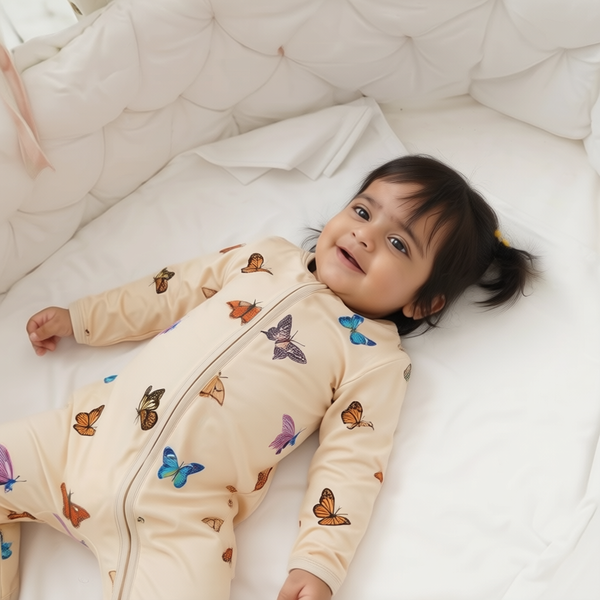
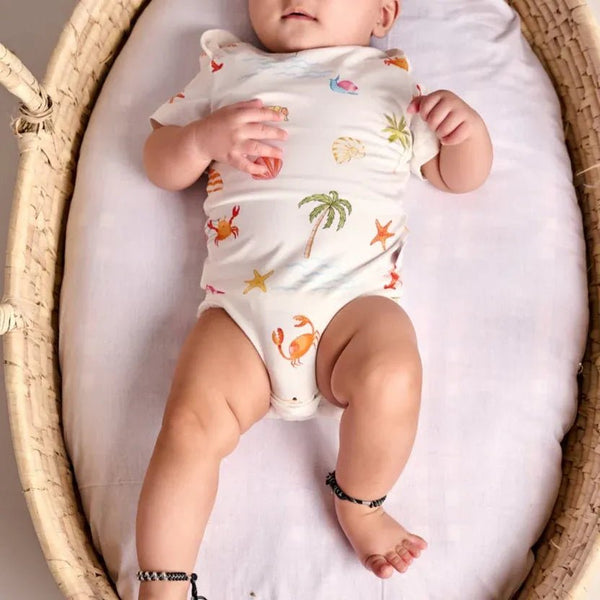

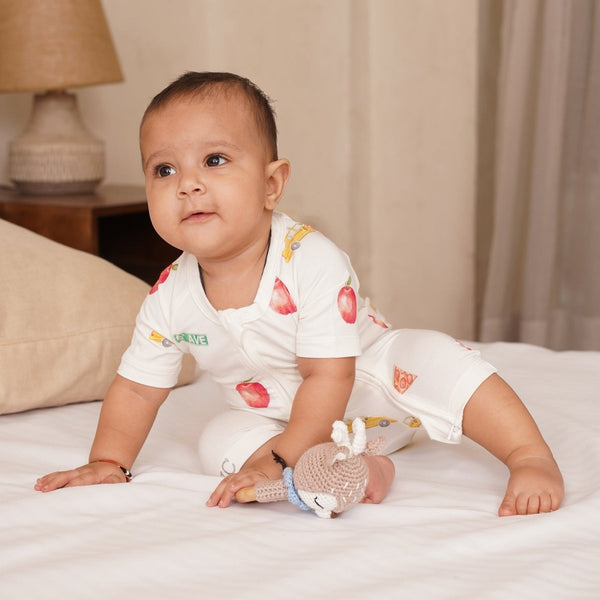

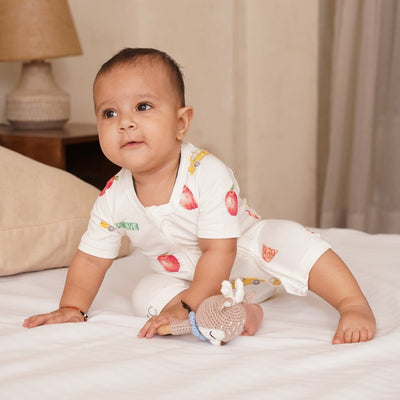
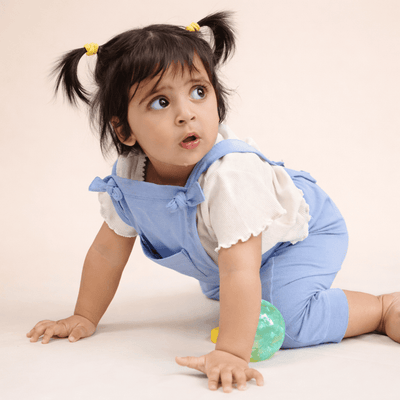


Crawling can feel like the milestone that takes forever. You see other babies zooming around and wonder, “Is my baby behind?” If your baby is not crawling yet, you are not alone. Many babies take their own sweet time, and “early” is not always better. What matters is helping your baby build strength, coordination, and confidence in a safe, low-pressure way.
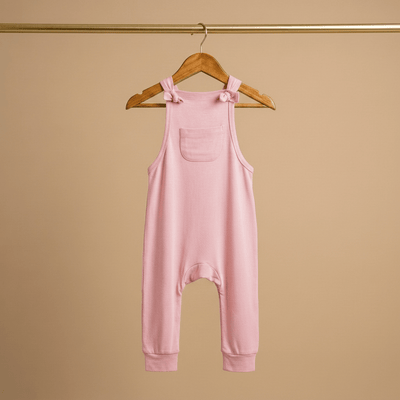
At Bubz, we design everyday essentials like bamboo bodysuits and rompers that keep babies comfortable through all the wriggling, rolling, and floor play that crawling practice involves. Soft, breathable clothing can make tummy time and movement practice a little easier for both baby and you.
Why Crawling Matters for Baby Mobility and Motor Skills Development
Crawling is a classic developmental milestone that supports gross motor skills, balance, and coordination. It helps babies learn how to shift weight, use both sides of the body, and build baby muscle strength in the shoulders, core, hips, and hands.
That said, crawling is not the only “right” path. Some babies do a belly crawl, some do an army scoot, some crawl late, and some skip crawling and move to pulling up and cruising. If you are tracking milestones, focus on progress over perfection. Your goal is to support baby physical development and keep movement fun and safe.
How to Help Baby Crawl: The Principles That Actually Work
If you are looking for practical tips to help baby crawl, these principles are your foundation:
- Consistency beats intensity. Short daily floor play sessions add up.
- Strength comes first. Tummy time for crawling and supported movement builds the base.
- Motivation matters. Babies move toward what feels rewarding.
- Safety supports confidence. A safe space helps babies try, wobble, and try again.
- Follow baby’s cues. Fussing is feedback, not failure.
Main Guide: 7 Simple Ways to Encourage Baby to Crawl
1) Do tummy time for crawling, but make it easier
Tummy time is one of the best baby crawling exercises because it strengthens the neck, shoulders, arms, and core. If your baby hates it, start smaller and smarter.
- Try 2 to 5 minutes, several times a day, instead of one long session.
- Do tummy time on your chest, then move to the floor.
- Place a rolled towel under the chest to help baby lift up more comfortably.
- Get down at eye level and talk, sing, or mirror baby’s expressions.
Over time, tummy time becomes floor play, and floor play becomes baby mobility.


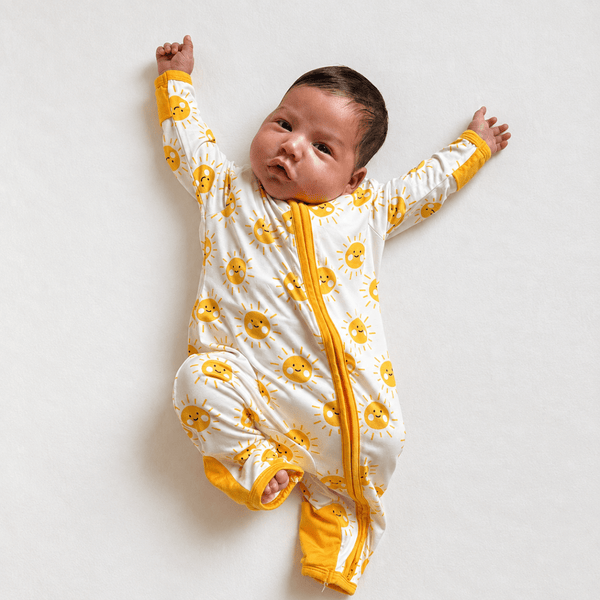
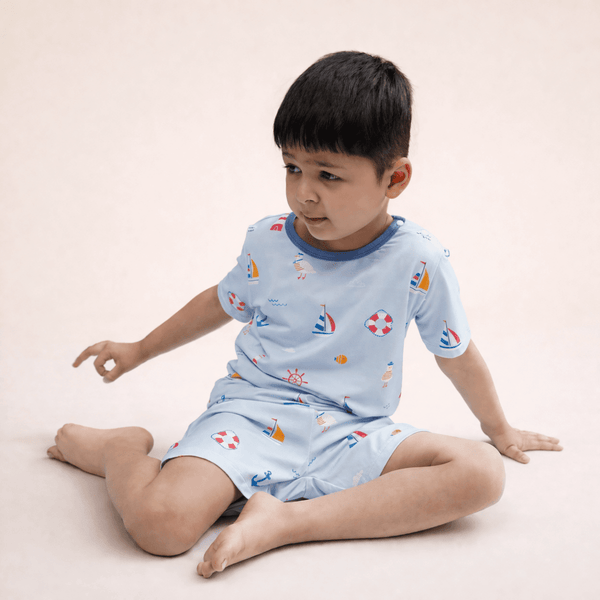
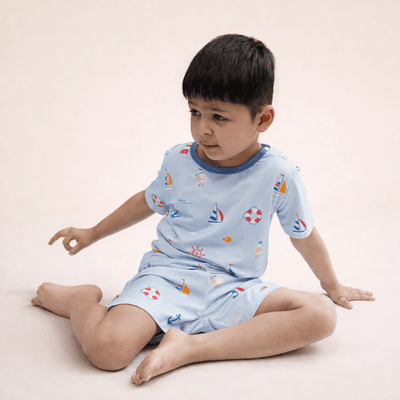
Sol Bamboo Short Sleeve Set
Rs. 1,650
2) Set up a safe floor play zone every day
Babies learn to move when the environment invites it. A consistent floor space makes practice feel normal.
- Use a firm play mat or carpeted area with enough grip for hands and knees.
- Clear small objects, cords, sharp edges, and unstable furniture.
- Keep a few engaging toys in the space and rotate them every couple of days.
- Dress baby in comfortable clothing that allows free movement, like soft zipsuits or stretchy bodysuits.
If you want clothing that stays breathable during active play, Bubz bamboo essentials are made for everyday movement. You can explore options at Bubz.
3) Use toy placement to trigger crawling readiness signs
Motivation is the secret ingredient. The easiest way to encourage baby to crawl is to place something interesting just out of reach.
- Start close. Place the toy 10 to 15 cm away.
- Gradually increase distance as baby gets more confident.
- Use a mirror, a musical toy, or a favorite soft object.
- Cheer effort, not speed. Crawling faster comes after baby learns the pattern.
4) Help your baby practice the hands-and-knees position
Many babies get stuck because hands-and-knees feels wobbly. This is where simple support helps build coordination.

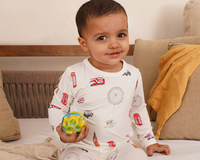
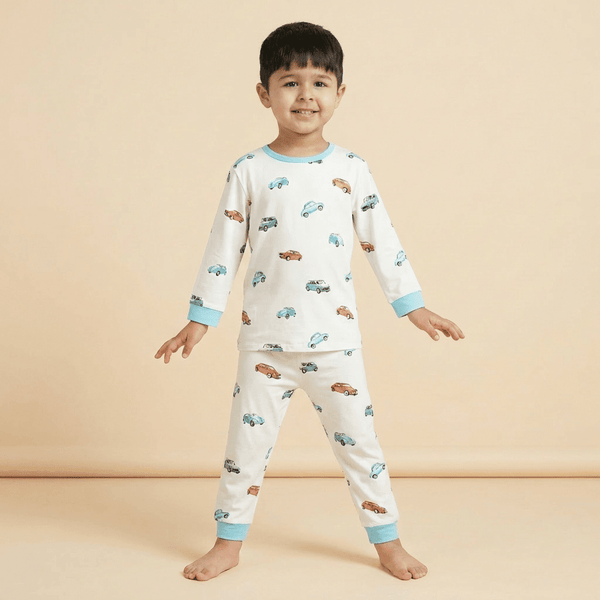
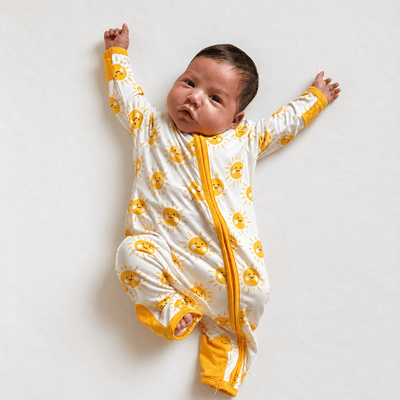
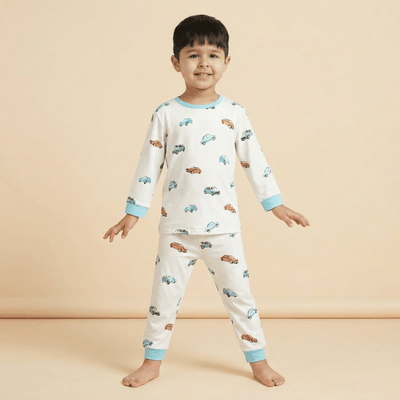
Vintage Wheels Bamboo Short Sleeve Set
Rs. 1,650
- Place baby on hands and knees, then gently rock forward and back.
- Support under the tummy with your hand for a few seconds if baby collapses.
- Let baby rest, then try again. Short reps build baby muscle strength.
5) Try baby crawling exercises that strengthen hips and legs
If you are wondering how to strengthen baby legs for crawling, focus on hips and core too. Crawling is a whole-body skill.
- Side-lying play: Place baby on their side with a toy in front. This builds trunk strength and rolling skills.
- Supported standing for a moment: Let baby bear weight on legs briefly while you hold their torso.
- Reaching games: In tummy time, place toys slightly to the side to encourage weight shifting.
- Rolling practice: Rolling builds the coordination that later supports crawling.
6) Create a “crawl path” at home
Make crawling feel like an adventure. A simple path encourages repeated practice without pressure.
- Place cushions or a folded blanket to crawl over, once baby can bear weight comfortably.
- Create a tunnel using a large cardboard box or a play tunnel.
- Use a line of toys like stepping stones, spaced out along the mat.
Keep it gentle and supervised. The goal is safe exploration, not obstacle-course performance.
7) Know when to wait, and when to get help
“Baby not crawling yet” can be completely normal. Many babies begin crawling between 7 and 10 months, and some do it earlier or later. What matters is steady progress in movement and strength.

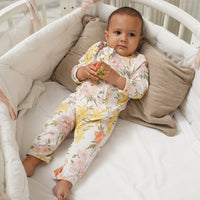
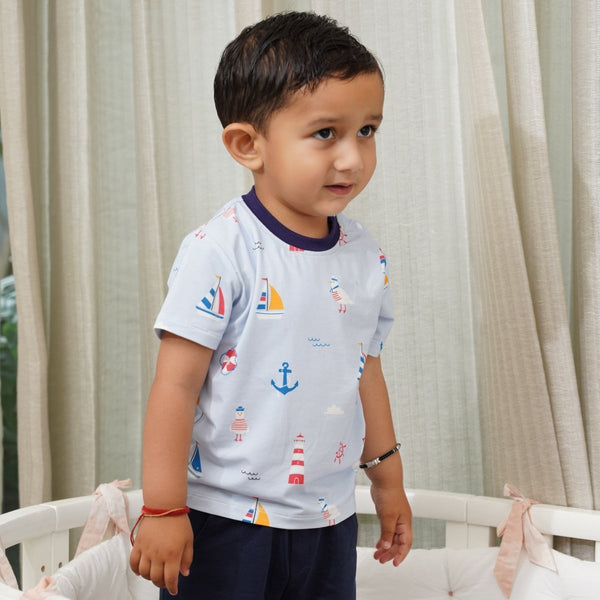
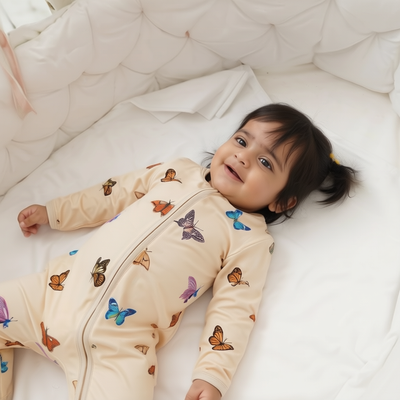
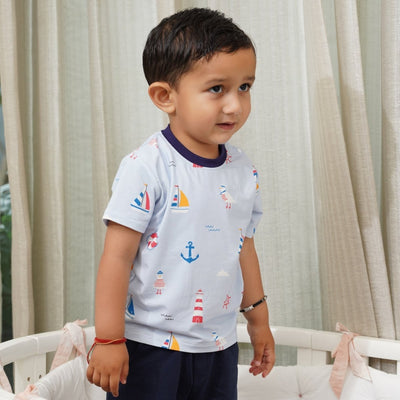
Wild Wonders Bamboo Short Sleeve Set
Rs. 1,650
Consider checking in with your pediatrician or a pediatric physiotherapist if you notice any of these:
- Very stiff or very floppy muscle tone
- Baby consistently uses one side of the body much more than the other
- No attempts to move, push up, or pivot by around 9 to 10 months
- Loss of previously gained skills
Getting support early can be reassuring, and often gives you simple, personalized exercises to do at home.

Quick Reference Table: Tips to Help Baby Crawl Safely at Home
| What to do | Why it helps | How often | Safety note |
|---|---|---|---|
| Tummy time | Builds shoulder, neck, and core strength | 2 to 5 minutes, multiple times daily | Always supervised |
| Hands-and-knees rocking | Improves coordination and weight shifting | 30 to 60 seconds, 2 to 3 times daily | Stop if baby is upset or collapses often |
| Toy just out of reach | Encourages forward movement attempts | During every floor play session | Avoid small parts and cords |
| Side-lying play | Strengthens trunk and supports rolling | 1 to 2 minutes per side | Use a firm surface |
| Safe floor zone | Promotes baby mobility through exploration | Daily | Baby-proof edges, sockets, and furniture |