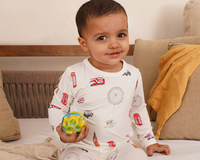
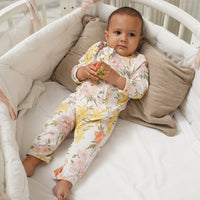
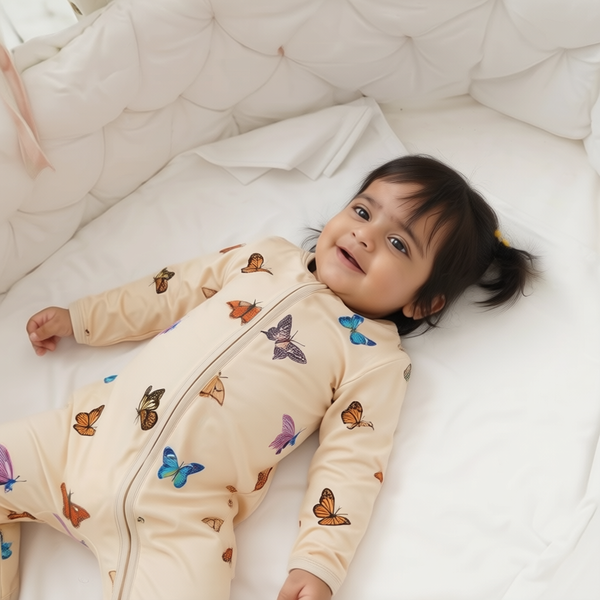
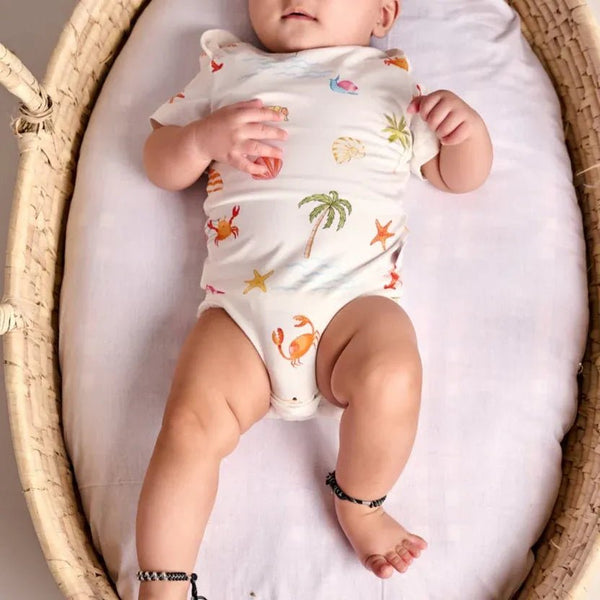

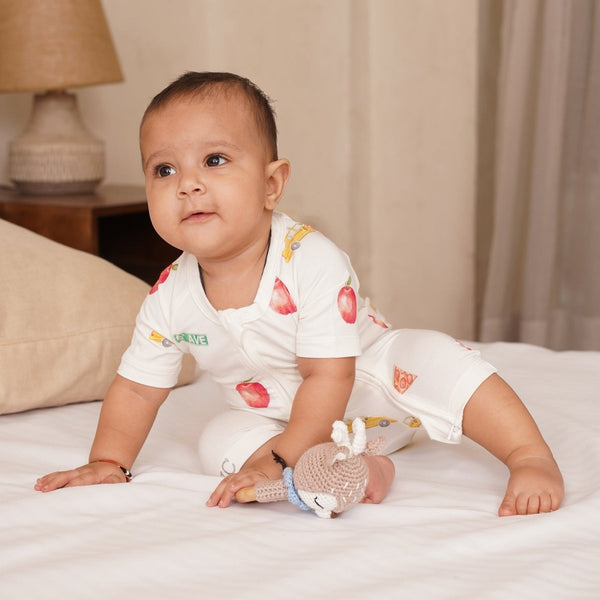
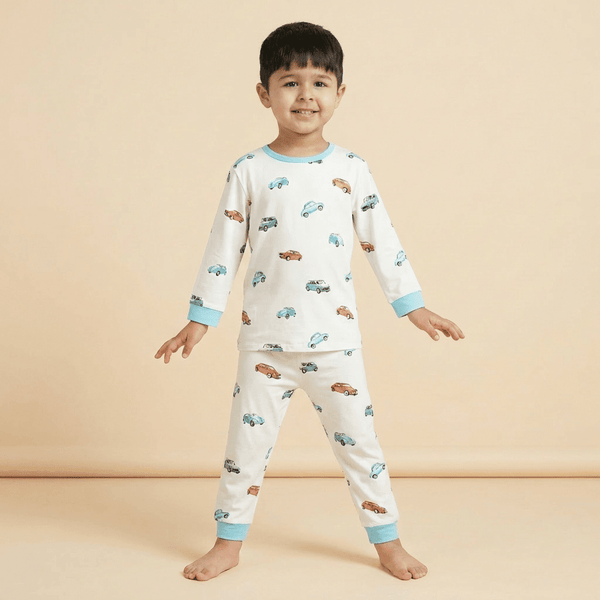
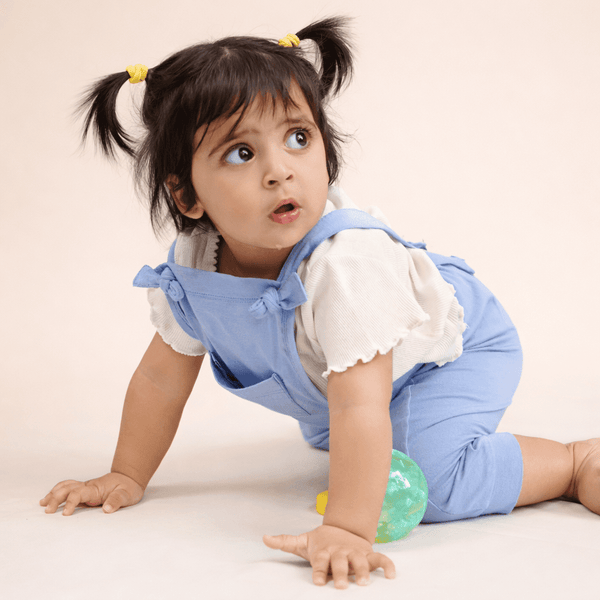
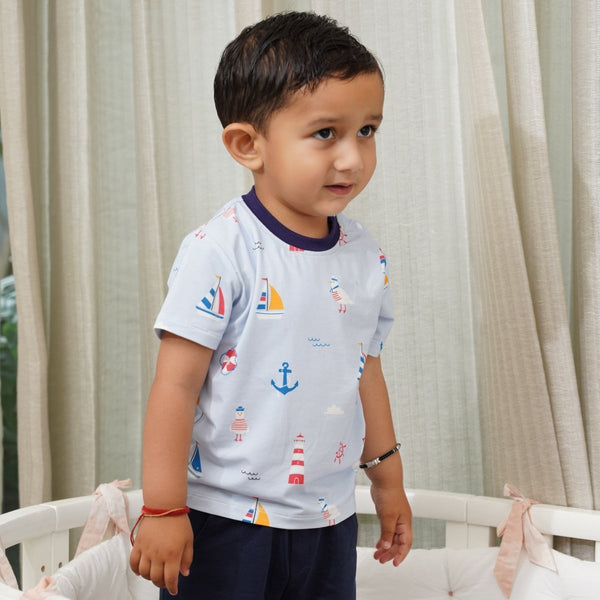
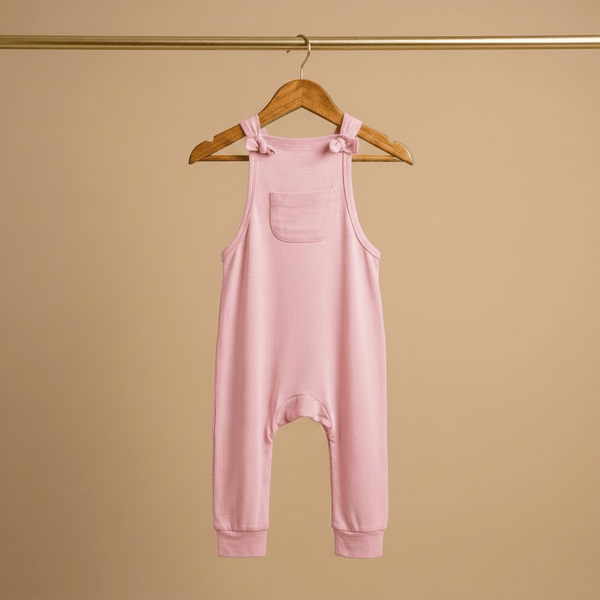

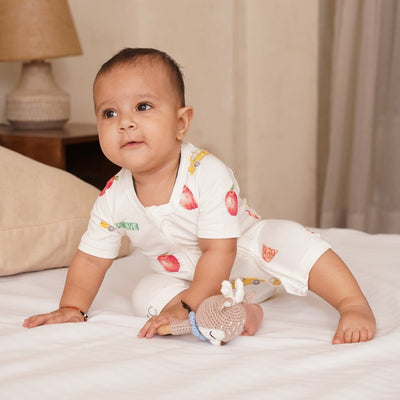
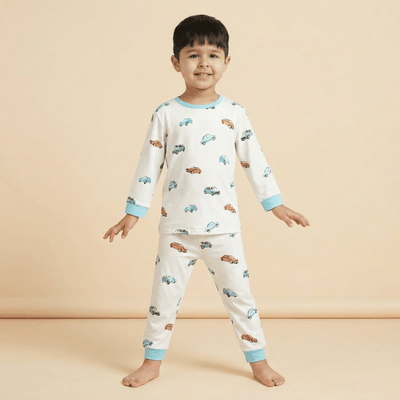
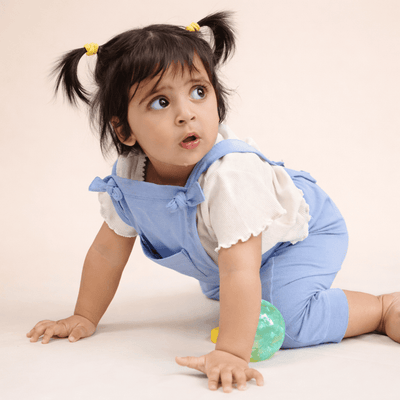
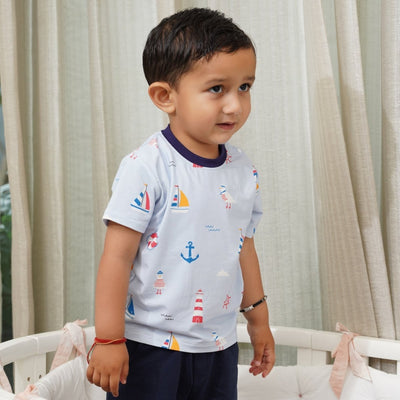
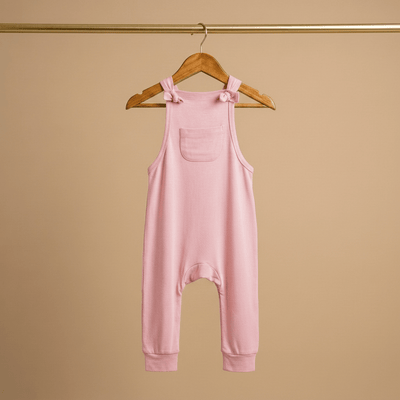
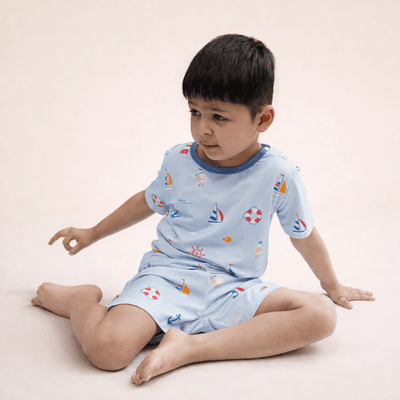
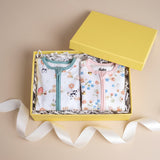

Nobody tells you that most of what you buy for a newborn never gets worn. The tiny party dress, the woollen booties in a Mumbai September, the six-piece set in a size your baby skipped entirely. Meanwhile you are washing the same three garments on repeat, because those are the ones that actually work.
This is a newborn baby clothes checklist for Indian parents that starts from the opposite end. Instead of listing everything you could buy, it lists what you will genuinely use in the first three months, and how many of each. At Bubz we make bamboo babywear, so we see which pieces parents reorder and which ones they never mention again. That pattern is what shaped this list.
Why a Minimalist Newborn Wardrobe Works Better
A newborn's day is short on variety and long on laundry. Your baby will feed, sleep, and produce somewhere between eight and twelve nappies in twenty-four hours. Clothes get changed because of spit-up and nappy leaks, not because of occasions.
That reality favours a small set of hardworking pieces over a large, decorative one. A minimalist newborn wardrobe means fewer decisions at 3am, fewer clothes outgrown with the tags still on, and more budget spent on fabric quality rather than quantity.
There is a practical Indian reason too. Drying time. In monsoon, a wash cycle can take a day and a half to fully dry indoors. Your working quantity needs to account for that, which is why the numbers below are slightly higher than most international checklists suggest.
The Newborn Clothes Checklist: What You Actually Need
Here is the core newborn essentials list for the first three months, in the quantities that actually clear the laundry cycle in Indian conditions.
|
Item |
How many |
Why it earns its place |
|---|---|---|
|
Zipsuits (footed, two-way zip) |
4 to 5 |
Overnight sleep and the newborn weeks |
|
Short-sleeve bodysuits |
5 to 6 |
Warm days alone, base layer underneath everything else |
|
Long-sleeve bodysuits |
3 to 4 |
AC rooms, cooler mornings, winter layering |
|
Rompers or co-ord sets |
3 to 4 |
Daytime once your baby is more awake |
|
Swaddles or muslin wraps |
3 |
Sleep, feeding cover, pram shade |
|
Caps or mittens |
2 sets |
First few weeks, and stopping face scratches |
|
Socks or booties |
4 pairs |
Non-footed outfits and cold floors |
|
Burp cloths |
6 to 8 |
The single most underestimated item |
That is roughly 30 pieces. It sounds like a lot until you divide it by three months and factor in two to three full changes a day.
How Many Zipsuits Does a Newborn Need?
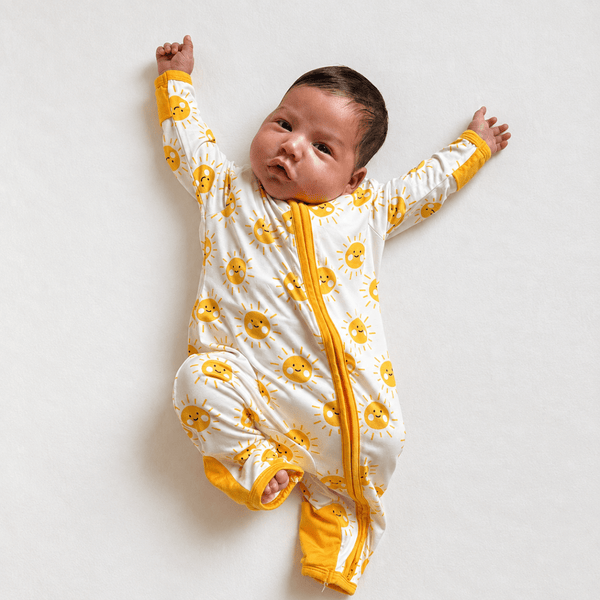
Four to five per size is the number that works. Zipsuits do the heaviest lifting in the newborn wardrobe because they cover the whole body and close in one movement. If two are in the wash and one has just been ruined at 2am, you want a fourth within reach.
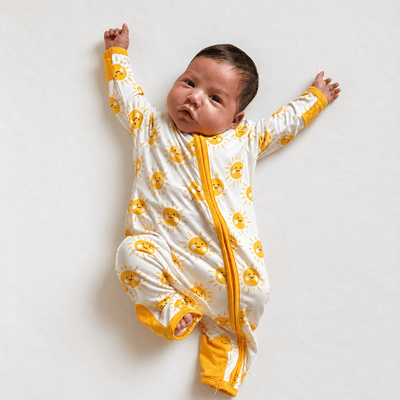
Look specifically for a two-way zip. A one-way zip opens only from the neck down, so a nappy change means undressing your baby completely. A two-way zip opens from the hem upward instead. You unzip the lower half, change the nappy, and zip back up, and your baby's chest and arms stay covered throughout. Our guide to the benefits of a zipsuit for young babies explains the design detail in full.
How Many Bodysuits for a Newborn?
Five to six short-sleeve and three to four long-sleeve is a sensible split for most of India. Bodysuits are the connective tissue of the wardrobe. They work alone on a humid afternoon, under a co-ord set in monsoon, and under a zipsuit on a cold night.
The long-sleeve count matters more than parents expect, because air-conditioned bedrooms sit at 20 to 24°C for eight hours a night. Adjust the ratio to your city. Chennai and Kochi lean short-sleeve, Delhi and Bengaluru winters need the long-sleeve stock.
What You Can Skip Entirely
Some categories are almost pure waste in the first three months. Anything that pulls over the head, because newborn neck control makes it a struggle. Jeans and structured trousers, because they fight nappies. Shoes, because your baby is not walking. Elaborate outfits with buttons down the back, because your baby will spend most of the day lying on them.
Also skip buying much in newborn size. Many babies arrive already at the top of that range, and some move into 0 to 3 months within a fortnight.
What Size Baby Clothes to Buy First in India
Buy mostly 0 to 3 months, with two or three newborn-size pieces for the first week or two. Indian sizing is usually printed in months rather than centimetres, and it runs slightly generous on some brands and slightly small on others.
Two rules make this easier. First, buy shallow and wide rather than deep in one size, so a growth spurt does not strand a whole drawer. Second, check length before width, because babies outgrow sleepsuits by height long before the fit around the body becomes an issue. A slightly roomy sleepsuit is fine. A short one bunches at the toes.
Fabric Is the Part Worth Spending On
If you are cutting the number of pieces, spend the saving on what touches the skin. A newborn's skin barrier is thinner and more permeable than an adult's, and these clothes are worn nearly twenty-four hours a day.
Bamboo fabric suits Indian conditions particularly well. It is smooth against skin, moisture-wicking rather than moisture-trapping, and naturally hypoallergenic, which helps with babies prone to eczema and heat rash. A 95% bamboo and 5% elastane blend keeps the softness while adding enough stretch to survive repeated wear and washing.
Two certifications are worth checking on the label. OEKO-TEX Standard 100 at Product Class 1 means the fabric has been tested against more than 300 harmful substances at the standard applied to items for babies. AZO-free dyes matter because dye chemistry sits directly against skin all night. Our guide to the best fabrics for baby sleep covers what to look for and what to avoid.
Building the Wardrobe by Season
The same checklist behaves differently across the Indian year, so let the season set the ratios rather than the totals.
Summer babies need more short-sleeve bodysuits and fewer footed zipsuits during the day, with breathable sleepwear for the night. Keep at least three zipsuits anyway, because AC rooms get cold.
Monsoon babies need the highest quantities of everything, purely because drying is slow. Add two extra bodysuits and one extra zipsuit to the counts above.
Winter babies need long-sleeve bodysuits as a base layer under zipsuits, rather than thick single garments. Layering is safer and easier to adjust than one heavy outfit. Our complete fabric guide for new parents goes deeper on fabric choices through the year.
What to Pack Versus What to Keep at Home
Only a small slice of this checklist needs to go to the hospital. Two zipsuits, two bodysuits, one swaddle, one cap and a pair of socks will cover a normal stay. Everything else can wait at home, washed and ready. Our hospital bag checklist sets out the full packing list for both mother and baby.
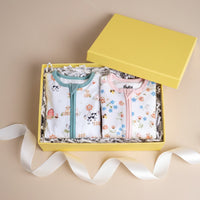
If you are buying for someone else rather than for your own baby, a zipsuit paired with two bodysuits in the same size is the most genuinely useful newborn gift there is. Our gifting bundles are built around that pairing.
Conclusion
A newborn wardrobe does not need to be big. It needs about thirty pieces that all work, in mostly 0 to 3 months, in fabric that can be worn against new skin for twenty hours a day. Four or five zipsuits, eight or nine bodysuits, a few rompers, three swaddles and plenty of burp cloths will carry you through the first three months better than a cupboard twice that size.
Start with the sleep pieces, since those get the most wear. Browse the Bubz bamboo zip suits collection for OEKO-TEX certified two-way zipsuits, and the bamboo bodysuits and rompers for the daytime layers, all in soft 95% bamboo with AZO-free dyes.
FAQ
1. What clothes does a newborn actually need in India?
For the first three months, plan on four to five footed zipsuits, five to six short-sleeve bodysuits and three to four long-sleeve bodysuits. Add three to four rompers or co-ord sets, three swaddles, two sets of caps and mittens, four pairs of socks, and six to eight burp cloths. That is around thirty pieces in total. Buy mostly 0 to 3 months rather than newborn size.
2. How many sleepsuits does a newborn need?
Four to five per size is the practical number in India. Babies need two to three full changes a day once spit-up and nappy leaks are counted, and monsoon drying times are slow. Anything fewer than four leaves you short whenever two are in the wash.
3. What size baby clothes should I buy before the baby arrives?
Buy mostly 0 to 3 months, with only two or three pieces in newborn size for the first week or two. Many babies arrive already near the top of the newborn range. Buying shallow across two sizes is safer than stocking up deep in one.
4. Do I need separate day clothes and night clothes for a newborn?
Not in the first few weeks, since newborns sleep in short stretches around the clock. A zipsuit works for both. From around six to eight weeks, a light distinction between daytime rompers and dedicated sleepwear can help set a day-and-night rhythm.
5. Is bamboo fabric better than cotton for a newborn wardrobe?
Bamboo is more breathable and more moisture-wicking than standard cotton, so it stays cooler in humid Indian conditions and is less likely to trap sweat. It is also naturally hypoallergenic, which helps babies with sensitive skin. Look for OEKO-TEX Standard 100 certification and AZO-free dyes on any fabric worn overnight.
6. How much should a full newborn clothing set cost in India?
Quality bamboo zipsuits typically sit between ₹1,500 and ₹1,900 each, with bodysuits priced lower. A thirty-piece wardrobe in certified bamboo therefore runs to roughly ₹30,000 to ₹40,000 if bought all at once. Most parents build it in stages instead, starting with the sleep pieces and adding daytime layers as the baby grows.
Sakshi Tiwari writes about bamboo baby clothing, infant care, and practical parenthood for Bubz India.